Every company wants to grow, but growth gets expensive when operations are messy. Sales may look good on paper, yet profits can shrink if teams waste time, inventory sits too long, or processes move slower than they should.
Think of it like running a restaurant. You may have a full dining room every night, but if food waste is high, staff scheduling is poor, and customers wait too long, the business is not truly efficient. It is just busy.
That is why operational efficiency matters. It shows how well a company uses its resources to create value. The goal is not to cut corners. The goal is to reduce waste, improve output, and protect quality at the same time.
So, How Do Companies Measure Operational Efficiency? They look at financial metrics, operational KPIs, process performance, technology, and improvement strategies. The best companies do not guess. They measure, adjust, and keep improving.
What Is Operational Efficiency and Why Does It Matter?
Understanding Operational Efficiency in Modern Business
Operational efficiency is the ability of a company to deliver products or services using the least possible waste. This includes money, labor, time, equipment, materials, and energy. A business is efficient when it produces strong results without draining unnecessary resources.
Efficiency is often confused with productivity and effectiveness. Productivity measures how much work gets done. Effectiveness measures whether the right goal was achieved. Efficiency looks at how smoothly and wisely the work was completed.
For example, two factories may produce 5,000 products in a week. If one factory uses fewer hours, less energy, and fewer rejected products, it is more efficient. The output is similar, but the resource use is better.
This is why operational efficiency has become a critical business objective. Costs are rising, customers expect faster service, and competition is tougher than ever. A company that wastes resources today may struggle to survive tomorrow.
The Impact of Operational Efficiency on Business Performance
Operational efficiency affects almost every part of a business. When processes work well, costs usually go down. Companies spend less on overtime, wasted materials, rework, storage, and delays. Those savings can then support growth, marketing, technology, or better customer service.
Customer satisfaction also improves. People may not care how a warehouse works, but they care when their order arrives late. Amazon became a powerful example of this. Its success is not just about selling products. It is also about fast fulfillment, smart logistics, and reliable delivery.
Efficiency can also create a competitive advantage. A company with lower operating costs can price more competitively, move faster, and respond more quickly to market changes. In simple terms, it has more room to breathe.
Profitability improves when companies reduce waste without reducing quality. That is the sweet spot. The business earns more from the same or even fewer resources.
What Key Performance Indicators (KPIs) Do Companies Use to Measure Operational Efficiency?
Financial Metrics That Reflect Operational Efficiency
Financial metrics help leaders see whether operations are supporting profit or eating into it. One common metric is operating margin. It shows how much profit remains after deducting operating expenses from revenue. A higher operating margin usually means the company is controlling costs well.
Cost per unit is another useful metric. It shows how much it costs to produce one product or deliver one service. If a company lowers cost per unit while maintaining quality, efficiency is improving.
Return on assets, often abbreviated as ROA, measures how effectively a company uses its assets to generate profit. Assets may include machines, buildings, vehicles, software, or equipment. A strong ROA shows that the company is not letting valuable resources sit idle.
Inventory turnover is especially important for retailers, manufacturers, and distributors. It shows how quickly stock is sold and replaced. High turnover often means inventory is moving well. Low turnover may suggest overstocking, poor demand planning, or slow sales.
Working capital efficiency assesses how well a company manages its short-term cash. It considers cash, receivables, inventory, and short-term debts. If too much cash is tied up in unpaid invoices or excess stock, operations can become strained.
Operational Metrics Used Across Industries
Operational metrics show what is happening inside daily workflows. Cycle time measures how long it takes to complete a process from start to finish. A shorter cycle time often means work is moving faster and with fewer delays.
Throughput measures how much work is completed in a set period. In manufacturing, it may refer to the number of units produced per hour. In customer service, it may mean tickets resolved per day. Higher throughput is helpful only when quality remains strong.
Capacity utilization shows how much of a company’s available resources are being used. Low utilization may mean machines, staff, or space are underused. Very high utilization may sound good, but it can lead to burnout, breakdowns, or mistakes.
First-pass yield measures how often work is done right the first time. This matters because rework is expensive. Toyota’s production system became famous partly because it focused heavily on reducing defects and improving quality at every step.
Employee productivity rates help companies understand workforce output. This does not mean squeezing people dry. It means checking whether employees have the tools, training, and support needed to perform well.
How Do Companies Evaluate Operational Processes and Performance?
Process Analysis Methods Used to Identify Inefficiencies
Metrics are useful, but they do not always show why a problem exists. That is where process analysis comes in. Companies use process mapping to show each step in a workflow visually. Once everything is mapped out, wasted steps become easier to spot.
Workflow analysis examines how tasks move among people, departments, and systems. Many businesses discover that delays happen during handoffs. One team finishes its work, but the next team waits for approval, missing information, or access to a tool.
Value stream mapping goes deeper by separating activities that create customer value from activities that do not. This method is common in Lean management. It helps companies ask a simple but powerful question: does this step actually help the customer?
Bottleneck identification is another key method. A bottleneck is the slowest point in a process. It controls how fast everything else can move. Fixing one bottleneck can sometimes improve the entire operation.
Lean process assessment helps companies find waste such as overproduction, waiting time, unnecessary movement, excess inventory, and avoidable errors. These issues may look small on their own, but together they can quietly drain profit.
Benchmarking and Performance Comparisons
Benchmarking helps companies understand whether their performance is strong, average, or poor. Internal benchmarking compares teams, departments, branches, or locations within the same company. If one branch serves customers faster, leaders can study what it is doing differently.
Competitive benchmarking compares performance against other companies in the market. This can reveal gaps in pricing, delivery speed, customer service, production cost, or quality. It also helps leaders avoid operating in a bubble.
Industry standards and best practices provide another useful point of comparison. A company may feel efficient internally but still fall behind industry leaders. Benchmarks help bring reality into the room.
Setting realistic performance targets is just as important. A goal should stretch the team, but it should not be impossible. Unrealistic targets can damage morale and encourage shortcuts.
The best companies use benchmarking as a learning tool, not a blame tool. The goal is to find better ways of working and then apply them consistently.
What Tools and Technologies Help Measure Operational Efficiency?
Business Intelligence and Data Analytics Solutions
Modern companies rely heavily on data to measure operational efficiency. Business intelligence tools help turn raw information into useful insights. Instead of digging through spreadsheets all day, managers can view dashboards that clearly show performance.
Dashboards and reporting tools track metrics such as sales, costs, cycle time, inventory, productivity, and customer service performance. When this data is easy to see, teams can respond faster.
Real-time performance monitoring is especially useful in fast-moving industries. A logistics company, for example, can track delivery delays as they happen. A manufacturer can monitor machine downtime before it disrupts production.
Predictive analytics helps companies look ahead. It uses past data to forecast demand, equipment failure, staffing needs, or supply chain risks. This gives leaders time to act before problems become expensive.
Data-driven decision-making reduces guesswork. Instead of saying, “I think this process is slow,” leaders can say, “The data shows this step adds two extra days.” That changes the conversation completely.
Automation and Enterprise Management Systems
Automation helps companies measure and improve efficiency by reducing manual work. Enterprise resource planning systems, commonly called ERP systems, connect departments such as finance, inventory, procurement, production, and human resources. This gives leaders a clearer view of operations.
Customer relationship management platforms, or CRMs, help companies track sales activity, customer interactions, service issues, and follow-ups. When customer data is organized, teams waste less time searching for information.
Manufacturing execution systems, known as MES tools, are valuable in production environments. They track what happens on the factory floor, including machine performance, production output, downtime, and quality issues.
Workflow automation software helps remove repetitive tasks. For example, approvals, reminders, reporting, and data entry can often be automated. This saves time and reduces human error.
AI-powered operational monitoring is also growing quickly. AI can detect unusual patterns, flag risks, and suggest improvements. It does not replace human judgment, but it can help teams see problems earlier.
How Can Companies Improve Operational Efficiency After Measuring It?
Strategies for Increasing Efficiency Across Departments
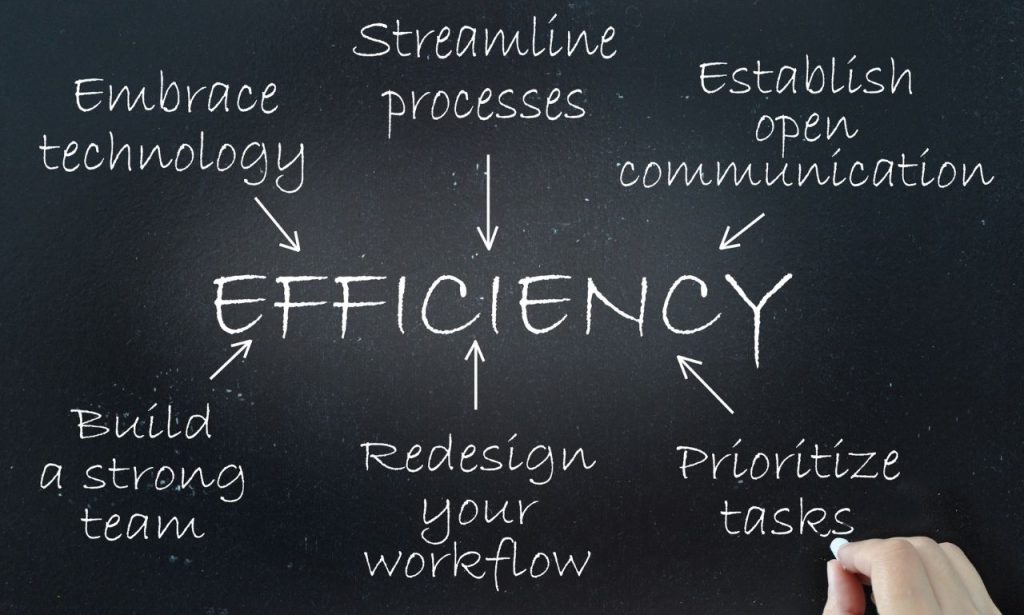
Once a company measures efficiency, the next step is improvement. Lean management principles are often used to reduce waste and focus on activities that create customer value. This approach encourages teams to simplify processes and remove unnecessary steps.
Six Sigma methodologies focus on reducing defects and variation. Companies use Six Sigma to improve quality, lower error rates, and create more predictable results. It is especially useful in industries where mistakes are costly.
Workforce training and development also matter. A company can buy the best software in the world, but poorly trained employees will still struggle. Training helps people work faster, make better decisions, and spot issues before they grow.
Resource allocation optimization ensures that people, money, tools, and equipment are used where they create the most value. Some teams may be overloaded while others are underused. Good resource planning brings better balance.
Continuous process improvement keeps efficiency from becoming a one-time project. Small improvements, made regularly, can create major long-term gains. It is like fitness. One workout helps, but consistency changes everything.
Common Challenges and Best Practices for Sustained Efficiency
Improving efficiency sounds simple until people have to change how they work. Resistance to change is one of the biggest challenges. Employees may worry that new systems will make their jobs harder or less secure.
Maintaining data accuracy is another issue. Poor data leads to poor decisions. If inventory numbers are wrong or employee productivity is measured unfairly, leaders may fix the wrong problem.
Companies also need to balance efficiency with quality. Cutting costs too aggressively can hurt customer experience. Nobody wants faster service if it comes with more mistakes.
Creating a culture of continuous improvement helps solve this. Employees should feel encouraged to suggest better ways of working. Often, the person closest to the process knows exactly where the waste is hiding.
Regular performance reviews and KPI tracking keep progress on course. Companies should review results, discuss lessons learned, and update goals as needed. Efficiency is not a finish line. It is a habit.
Conclusion
How Do Companies Measure Operational Efficiency? They measure it by looking at the numbers, studying the processes, comparing performance, and using technology to uncover what is really happening.
The strongest businesses do not rely on guesswork. They track operating margin, cost per unit, cycle time, throughput, inventory turnover, employee productivity, and other key metrics. Then they use those insights to improve workflows, reduce waste, and better serve customers.
Operational efficiency is not about doing everything cheaper. It is about doing the right things better. When a company gets that balance right, growth becomes easier, profits become stronger, and customers feel the difference.
If your business were to review its operations today, what would it find? A small bottleneck? A costly delay? A process everyone complains about, but nobody fixes? Start there. That is usually where the biggest opportunity is hiding.
Also Read: What Causes Strategy Execution Failures in Companies?
FAQs
Operational efficiency is the ability to deliver products or services using the least waste, time, money, and resources.
Operating margin is one of the best KPIs because it shows how well a company controls costs while generating revenue.
Companies measure it to reduce waste, improve productivity, increase profits, and deliver better customer experiences.
Most companies track important efficiency metrics continuously and review deeper performance trends monthly or quarterly.
Yes. Small businesses can measure cycle time, cost per unit, employee productivity, inventory turnover, and customer response time.
Leave a Reply